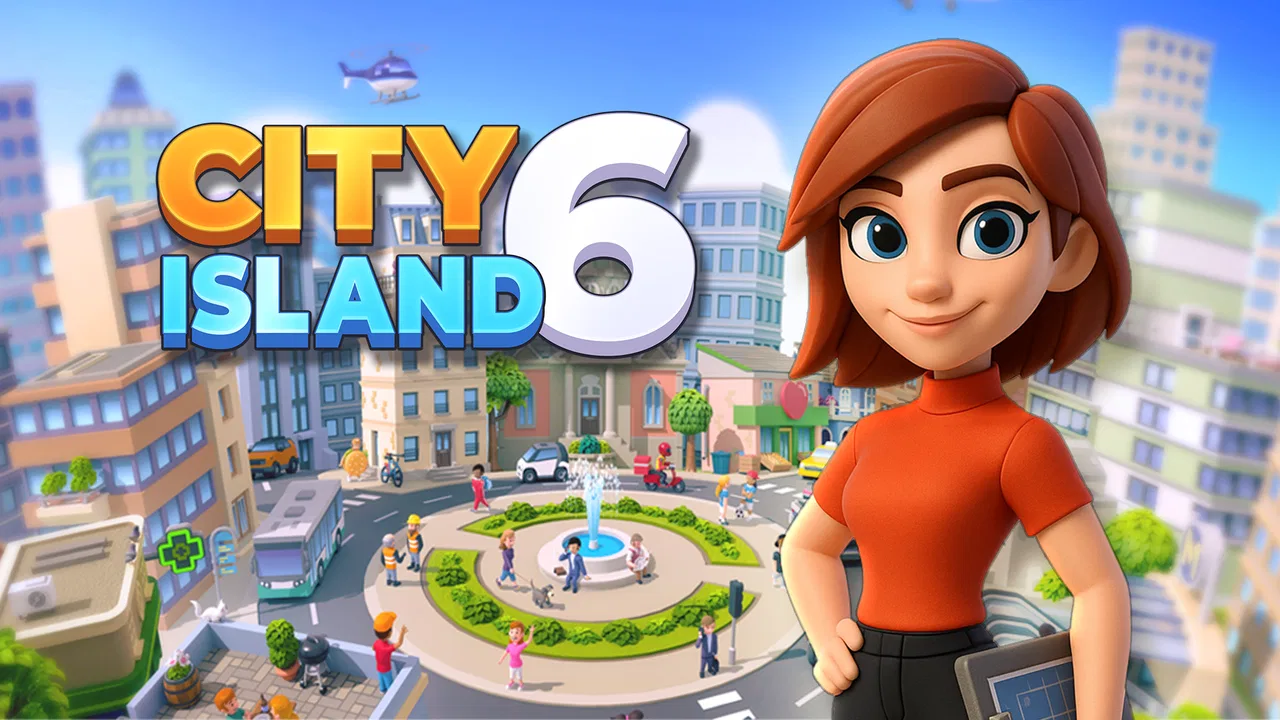
City Island 6: Building Town
- 4.6
- Rating
- 1.00M
- Installs
- Free
- Price
 Analysis by App-foxy
I spent time with City Island 6: Building Town as a relaxed city-building simulation, and my first impression was that it understands the appeal of building in small, satisfying steps. You begin with a modest settlement rather than an overwhelming metropolitan puzzle, then gradually turn that space into a town that feels more personal because each improvement comes from a decision you made. It is free to play, suitable for Everyone, and comes from Sparkling Society - Build Town City Building Games, a developer with a clear focus on town-building games.
The important question is not whether it lets you place buildings. Plenty of mobile games do that. The better question is whether the goals, unlocks, and waiting between decisions make you want to return. In my experience, this game works best when I treat it as a short, ongoing project instead of a fast strategy challenge. I check what the town needs, make one or two useful changes, and leave with a clear idea of what I want to improve next.
How the first goals pull you into building
The opening rhythm is easy to understand. I am not asked to master a complicated economy before I can enjoy the town. The early stage is about learning how construction and expansion fit together, while watching the settlement become more convincing with each addition. That gentle start is a good choice for players who like simulation games but do not want a dense spreadsheet immediately.
You May Also Like

 Blood Strike: 2.5 Anniversary
Blood Strike’s Loadouts Turn Every Drop Into a Tactical Gamble
A close look at Blood Strike’s custom loadouts: how fast access to signature weapons reshapes its battle royale rhythm, rewards preparation, and narrows the gap between fights.

 Pandora - Music & Podcasts
Pandora’s Music Is Easy to Start, but Harder to Recover
Pandora’s strength is its low-effort path from a seed to a station. Its weak spot is how much confidence it asks you to place in connection, setup, and quiet recovery.

 8 Ball Pool
 Is Built on Rivalries, Rematches, and Routine
A close look at the rivalries, rematches, shared routines, and unanswered safety questions that turn a quick pool match into a persistent mobile community.

 Samsung Music
’s Quiet Strength Is Playing What You Already Own
Its reach comes less from spectacle than from dependable access to a personal library. That simplicity is both the app’s strongest retention engine and its ceiling.

 AccuWeather: Weather Radar
AccuWeather Review: A Quick, Clear Forecast for Everyday Decisions
For everyday plans, the best forecast is the one you can understand quickly. AccuWeather makes rain timing, radar, and local conditions easy to act on, with a few trade-offs.

 Hill Climb Racing
Why Hill Climb Racing Still Turns Crashes Into One More Run
A tiny car, a bumpy hill and one more upgrade: Hill Climb Racing keeps resurfacing because its simple chaos makes every near-miss feel personal.
More From Our News Desk



What kept me interested was the way small objectives create a visible reason to continue. A new building is not just another object in a menu; it changes the shape and usefulness of the settlement. I found myself thinking about the next sensible improvement rather than placing everything randomly. That makes the first sessions feel purposeful, even when the individual actions are simple.
My advice is to resist the urge to build only what looks attractive. Early on, I got better results by treating every placement as part of a plan: leave room for future growth, keep the town readable, and avoid filling useful space with choices that do not help the next goal. A tidy layout is not merely cosmetic. It makes later decisions easier because I can immediately see which part of the town needs attention.
This is also where the game shows its intended audience. It is more welcoming than a traditional city-management title that expects players to understand traffic, taxation, zoning, or several overlapping services from the start. If you want a calm introduction to the genre, the opening hours are approachable. If you want immediate pressure and difficult trade-offs, the beginning may feel too forgiving.
Progress is easiest to understand when the town changes visibly
The strongest progress signal is the settlement itself. I can look at the town and recognize that it has moved beyond its starting point. That visual feedback matters in a building game because numbers alone rarely create the same satisfaction. Seeing a previously empty area become part of the community gives each session a clear before-and-after feeling.
Unlocks also help structure the experience. Instead of presenting every possibility at once, the game gives me reasons to keep working toward the next stage. I like this approach because it protects the early game from becoming a menu-management exercise. There is always a little curiosity involved: what will become available after I complete the current sequence of improvements?
One useful habit is to take a moment to inspect the whole town after an unlock rather than immediately placing the new option. New possibilities can tempt me into spending resources simply because they are available. I get more value when I ask whether the addition supports my current layout or solves a practical problem. This turns unlocking into a planning moment, not just a reward animation.
The sense of progress is not equally strong at every point. Early changes are obvious because the town is small. As the settlement grows, an individual addition can feel less dramatic. That is normal for this type of game, but it means I need to set my own mini-goals. Improving one district, organizing a crowded area, or preparing a clean space for future construction gives the middle portion more direction.
For players who enjoy completion, the steady appearance of new targets can be motivating. For players who prefer a single dramatic campaign with a firm ending, the open-ended town-building format may feel less decisive. The game is better at supporting an ongoing routine than delivering a tightly scripted adventure.
The difficulty curve favors patience over pressure
City Island 6: Building Town is not built around punishing mistakes. Its challenge comes from choosing what to do next and managing the pace of improvement. I rarely felt pushed into frantic actions. Instead, the game asked me to notice what the town needed, wait for the right opportunity, and avoid wasting progress on an impulse decision.
That gentle curve is one of its biggest strengths for casual players. I can play while taking a break, return later, and continue from a familiar situation without having to relearn a complicated system. It also makes the game comfortable for younger players, which fits its Everyone age rating. The experience feels more like guided construction than a high-stakes management test.
The trade-off is that experienced simulation fans may find the challenge light. If your favorite city games are about recovering from disasters, balancing several difficult systems, or solving problems under strict deadlines, this will probably not provide the same tension. Its appeal is the gradual shape of a town, not the drama of keeping a failing city alive.
I found the difficulty more interesting when I created constraints for myself. For example, I tried to keep new construction organized instead of scattering buildings wherever space appeared. I also delayed attractive additions until they made sense within the wider plan. These self-imposed rules do not transform the game into a hardcore strategy title, but they make each placement feel more meaningful.
Another practical approach is to divide a session into two questions: what helps the current objective, and what protects the next objective? The first prevents me from wandering. The second stops me from using all available room or resources without considering future growth. This is especially useful once the town has enough buildings that a quick placement can create clutter.
Where the pacing feels rewarding and where it slows
The pacing is designed around repeated returns rather than one long sitting. I make progress, reach a point where the next improvement needs time or preparation, and then come back later. That structure suits mobile play. A short visit during a commute, lunch break, or quiet evening can still feel worthwhile because the town remembers the work already done.
A realistic everyday scenario is checking the game after dinner. I might spend a few minutes reviewing the current goal, place an improvement that fits the layout, and then stop before I start building carelessly. The next day, I have a clear reason to reopen it. That small loop feels healthier than a game that demands a long session before anything changes.
However, the same design can feel slow if I want constant interaction. There are moments when I know what I want to build but cannot advance at the speed I would prefer. This is where the free-to-play structure becomes relevant. In-app purchases range from $0.49 to $99.99 per item, so players should decide early whether they are comfortable progressing patiently or spending to reduce friction.
I do not think spending is necessary to understand the game, but the presence of purchases can affect how the pacing feels. A player who dislikes waiting or strongly prefers uninterrupted construction may become frustrated. Someone who sees the game as a relaxed background hobby is more likely to accept the slower rhythm. My recommendation is to play it without spending first and judge whether the natural pace feels enjoyable before considering any purchase.
The game has more than one million installs and a 4.6 average from around 104 thousand ratings, which suggests that this relaxed format has found a substantial audience. I would not treat popularity as proof that every player will enjoy it, but it does match my impression that the game is aimed at people who like accessible, long-running town projects rather than demanding competitive play.
Retention comes from unfinished plans, not constant urgency
The most effective reason to return is having an unfinished plan. I often remembered a section of town that needed reorganizing or an improvement I wanted to prepare for. That is a better kind of retention than simply being pushed by alarms or pressure. The game gives me a growing place to care about, and that personal investment makes the next session feel natural.
There is a subtle difference between a goal that invites me back and a goal that nags me. This game generally works on the inviting side when I set a manageable target. If I try to do everything at once, the town can feel like a collection of tasks rather than a place I am building. Keeping one main objective and one optional improvement makes the experience much clearer.
Players should also think about what kind of satisfaction they want from a simulation. The game is good for watching a settlement evolve, making aesthetic choices, and enjoying incremental unlocks. It is less suitable if you need a strong narrative, direct competition, or a deep economic puzzle with many consequences. The absence of those pressures is relaxing for some people and under-stimulating for others.
Compared with the usual alternatives in the city-building category, this game sits on the accessible, mobile-friendly side. More complex city simulators may offer richer systems and harder decisions, but they can also demand more attention and punish poor planning more severely. Pure decoration games may let you arrange attractive spaces, but they often provide less of the structured progression that makes this title engaging. City Island 6: Building Town occupies the middle ground: it gives me goals and growth without turning every choice into a crisis.
That middle ground is also its main limitation. Players moving from a deep desktop-style city simulator may notice that the management layer feels lighter. Players moving from a purely decorative builder may need time to adjust to objectives and pacing. I would choose it for an easygoing town project, not as a replacement for a highly detailed urban-planning simulation.
Practical choices that make the middle game better
My first practical tip is to build with future empty space in mind. A town that looks efficient at the beginning can become awkward once new options appear. Leaving deliberate gaps gives me flexibility and prevents the later game from becoming a constant exercise in undoing earlier placements.
My second tip is to separate visual decisions from progress decisions. Sometimes I want a building because it makes the town look nicer, while another option is more useful for the current objective. I get less frustrated when I acknowledge which kind of choice I am making. If the goal is progress, I prioritize function; if I am taking a relaxed session, I allow myself to decorate.
My third tip is to use the pause between goals as a planning window rather than assuming I have stalled. When the next step is not immediately available, I review the town’s shape, identify crowded areas, and prepare a cleaner layout. That turns slower pacing into useful preparation and makes the next active session feel more deliberate.
A fourth insight is that the game rewards consistency more than heroic sessions. Returning briefly and making one sensible improvement is often more satisfying than playing for a long time and filling every available space. This is particularly helpful for people who want a simulation game that fits around work, study, or family routines.
The current version is 6.8.1, and the game requires Android 6.0 or later. On the practical side, that makes it accessible to people using older compatible devices, although the exact feel will still depend on the phone or tablet. I would keep expectations realistic: this is a mobile town-building experience designed for convenient sessions, not a large-screen city-management workstation.
Who should play it and who should skip it
I would recommend it to anyone who likes watching a small settlement grow over time, especially if you enjoy clear goals and visible changes without harsh failure states. It is a good fit for casual players, younger players, and people who want something they can open for a few minutes without committing to a full campaign session.
It is also a sensible choice for players who enjoy making their own order out of gradual unlocks. The most satisfying moments came when I stopped viewing the town as a checklist and started treating it as a space with a future layout. That mindset makes the simple actions feel more strategic than they first appear.
I would skip it if you need fast progression, intense challenge, or a detailed simulation of every urban system. I would also be cautious if in-app purchases make you uncomfortable, because the available price range is wide and the game’s slower rhythm may test your patience. A more demanding strategy title would suit someone seeking complex consequences, while a purely creative builder would be better for someone who wants decoration without structured objectives.
My progression verdict after settling in
City Island 6: Building Town succeeds because its progression is easy to read. Early goals teach the rhythm, unlocks provide a reason to continue, and the growing town supplies a visual record of my decisions. The challenge remains gentle, but that is intentional: the game wants me to return regularly, not recover from disasters or compete against a clock.
The pacing is strongest when I accept the game as a long-term hobby. I plan a little, make a useful improvement, and let the next goal give shape to a future session. It is weaker when I expect nonstop construction or a deep management puzzle. The free price makes it easy to try, while the Everyone rating broadens its appeal, but the in-app purchase range means patient play is the safest way to decide whether the progression feels fair to me.
With around 2 thousand reviews alongside its larger rating base, the game has clearly attracted ongoing attention, and I can understand why. It offers a friendly route into city simulation without demanding expert knowledge. My honest recommendation is to try it when you want a calm, goal-driven town builder that rewards steady planning rather than speed. Just keep the town organized, set your own small targets, and do not mistake a slower pace for a lack of direction. For the right player, that pace is exactly what makes the settlement worth returning to.
FAQs for City Island 6: Building Town
01What is City Island 6: Building Town?
City Island 6: Building Town is a city-building simulation game in which you develop an island settlement from a small community into a thriving town. You can place residential buildings, businesses, decorations, roads, and public facilities while managing resources and completing objectives. The game is designed for casual play, with a colorful presentation and a steady progression system suitable for players who enjoy creative management games.
02Can I play City Island 6 offline?
City Island 6 can generally be played without a constant internet connection, which makes it convenient for short sessions while traveling or when mobile data is unavailable. However, some features may require an online connection, including advertisements, cloud-related functions, updates, special events, or purchases. For the most reliable experience, it is best to connect to the internet occasionally and keep the game updated through the official app store.
03Is City Island 6: Building Town free to download?
Yes, City Island 6: Building Town is available as a free download, but it includes optional in-app purchases. These purchases may provide premium currency, speed up construction, unlock helpful items, or offer additional advantages during progression. You can play without spending money, although construction timers and resource limits may make progress slower. Parents should also review purchase settings before allowing children to play.
04What can I do in City Island 6 besides constructing buildings?
The game offers more than simply placing buildings on an island. You can expand your territory, organize roads, improve the appearance of your town with decorative objects, collect resources, complete missions, and balance the needs of your growing population. Different structures contribute to income, happiness, or development, so planning your layout is important. Regular objectives and unlockable content also provide reasons to continue improving the city.
05What devices are compatible with City Island 6: Building Town?
City Island 6: Building Town is designed for Android and iOS mobile devices, but exact compatibility depends on the operating system version, available storage, and hardware performance. Older phones or tablets may experience longer loading times, reduced visual quality, or occasional performance issues in larger cities. Before downloading, check the current requirements on Google Play or the Apple App Store and make sure your device has enough free space for the installation and future updates.
Pros
- Relaxed city-building gameplay suitable for short or longer sessions.
- Large selection of buildings
- decorations
- and island layouts to explore.
- Offline play is available for many core activities.
- Quests and events provide clear goals beyond basic construction.
- Bright visuals and friendly presentation make it accessible for all ages.
Cons
- Energy limits can interrupt building progress during longer sessions.
- Some upgrades and resources require considerable waiting or grinding.
- Frequent events and offers may feel distracting to players who prefer simplicity.
- Managing several islands can become repetitive after extended play.
- Progress may feel slower without spending premium currency.

City Island 6: Building Town
Gallery